Adaptogens for men explained: the Vigor Peak guide to ginseng, maca and mucuna

Updated August 2026 · reviewed by the Vigor Peak Research Team. We are an independent information resource, not a medical provider, and this article is educational rather than medical advice.
Adaptogens for men are a traditional group of plants — ginseng chief among them — used to help the body cope with everyday stress and stay in balance. This guide explains what adaptogens actually are, where maca and mucuna fit, and how the three appear inside Vigor Peak.
The fast, quotable version, in one place.
- What they are
- Adaptogens are a traditional herbal category — plants like ginseng said to help the body handle everyday stress and stay balanced. The label comes from tonic tradition, not a medical diagnosis.
- The evidence
- Early and mixed. Panax ginseng has the most human research; maca and mucuna rest more on tradition and smaller studies. None is a proven treatment for any condition.
- Ginseng, maca & mucuna
- Ginseng is the classic adaptogen; maca is a Peruvian energy-and-stamina root; mucuna is a velvet bean and natural L-DOPA source. All three feature in men’s wellness traditions.
- In Vigor Peak
- Panax ginseng, maca and mucuna sit alongside L-citrulline, pine bark, ginkgo and L-carnitine in a once-daily two-capsule formula.
“Adaptogen” is one of those wellness words that gets used everywhere and explained almost nowhere. If you have seen it on a supplement label — including on Vigor Peak — and wondered what it really means for a man in his forties, fifties or beyond, this guide is for you. We will keep it honest: strong where the tradition is strong, cautious where the science is thin.
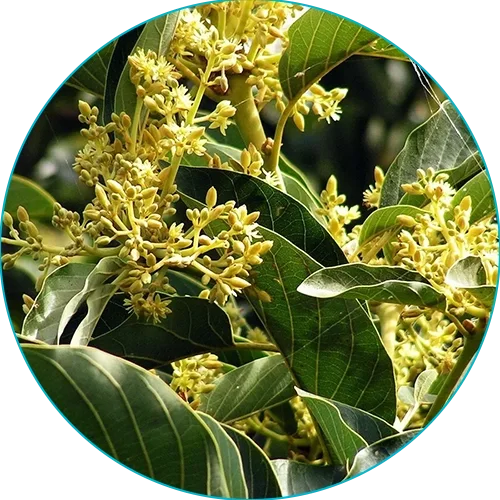
What are adaptogens, exactly?
Adaptogens are a traditional category of plants believed to help the body resist and adapt to everyday physical and mental stress while nudging it back toward balance. The idea dates to twentieth-century herbal research and much older tonic traditions in Chinese and Ayurvedic medicine, where certain roots and berries were reserved for building stamina and resilience over time. It is important to be clear that “adaptogen” is a historical and functional label, not a formal medical diagnosis or a regulated drug class. That distinction shapes everything that follows.
The best-known adaptogens are Asian (Panax) ginseng, ashwagandha, rhodiola, eleuthero and holy basil. What they are said to share is a broad, non-specific “steadying” action: rather than targeting one symptom, tradition holds that they help the whole system cope. Modern science is still testing whether — and how much — that holds up, which is exactly why an honest article has to separate the tradition from the trial data.
What makes a herb “adaptogenic”?
A herb earns the adaptogen label in tradition by meeting three loose criteria: it should be broadly safe at normal doses, it should help the body handle many kinds of stress rather than one, and it should be balancing — calming when you are wired, supporting when you are flat. Those are old herbalist ideas, not modern clinical thresholds, so treat them as a useful framework rather than proof.
Do adaptogens act on stress hormones?
The proposed mechanism centres on the stress response — the network that governs cortisol and your day-to-day sense of energy and calm. Some laboratory and early human research suggests certain adaptogens may influence markers tied to stress and fatigue. But the studies are often small, short and varied in quality, so the fair summary is “plausible and being studied,” not “established.”
Are adaptogens the same as stimulants?
No — and this is a common mix-up. A stimulant like caffeine pushes you up sharply and wears off. Adaptogens are traditionally described as doing the opposite: working quietly and cumulatively with daily use to support a steadier baseline. That is why they are taken as a consistent habit rather than a pre-workout jolt, and why any benefit tends to build over weeks.
Which adaptogens and tonic herbs matter most for men?
For men specifically, three botanicals come up again and again — ginseng, maca and mucuna — because each has a long history tied to energy, stamina and drive. Strictly speaking, only ginseng is a textbook adaptogen; maca and mucuna are better called traditional tonic botanicals that are usually grouped alongside adaptogens because they play the same everyday, resilience-supporting role in men’s wellness.
| Botanical | Category | Traditional role in men’s wellness | Evidence base |
|---|---|---|---|
| Panax ginseng | Classic adaptogen | A storied tonic for resilience, stamina and everyday energy | Most-studied of the three; results mixed |
| Maca | Tonic root | Peruvian root long used for energy, stamina and sexual vitality | Some human studies; early and small |
| Mucuna pruriens | Tonic legume | Velvet bean; natural L-DOPA source linked to mood, drive and libido | Largely traditional plus smaller studies |
| Ashwagandha | Classic adaptogen | Ayurvedic tonic used for stress, sleep and vigour | Growing but still emerging research |
| Rhodiola | Classic adaptogen | Arctic root used for fatigue and mental stamina | Early human trials; mixed quality |
How do ginseng, maca and mucuna fit into Vigor Peak?
Inside Vigor Peak, ginseng, maca and mucuna form the adaptogen-and-tonic side of the formula, working next to circulation-focused ingredients. The design idea is straightforward: pair botanicals with a traditional resilience and drive role alongside nutrients associated with healthy blood flow, so a man gets both halves of the everyday-vitality picture in one two-capsule habit.
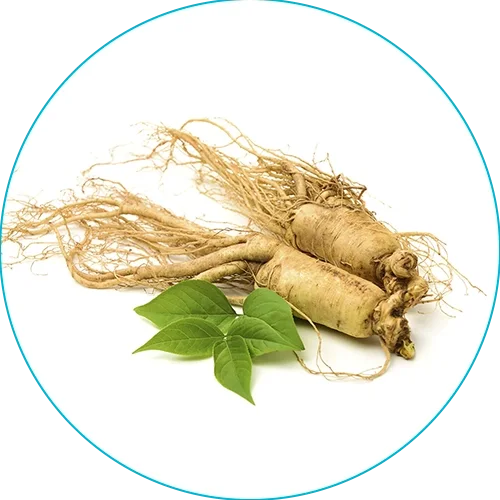
Panax ginseng — the classic adaptogen
Panax ginseng is Vigor Peak’s true adaptogen and the most-researched botanical of the group. Traditionally prized as a tonic for stamina and everyday resilience, it has been explored in human studies for fatigue and general performance, although findings remain mixed and depend heavily on the extract and dose used. For a deeper look, see our dedicated guide to panax ginseng benefits for men.
Maca — the stamina root
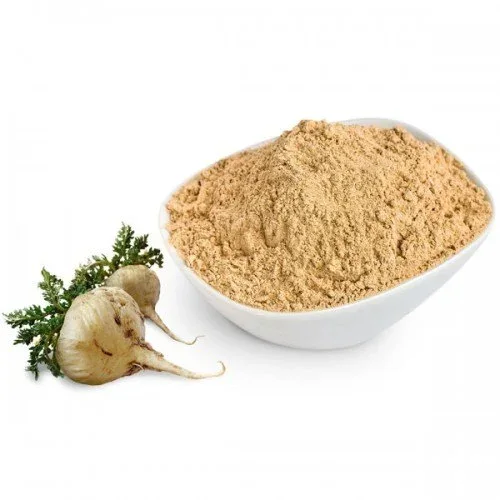
Maca is a Peruvian root traditionally used to support energy, stamina and sexual vitality, and it is one of the better-known tonic plants in the men’s category. Some small human studies have looked at maca and aspects of well-being and libido, but the evidence is early and should not be oversold. Our guide to maca root benefits for men covers what the research does and does not say.
Mucuna pruriens — the velvet bean
Mucuna pruriens is a velvet bean and a natural source of L-DOPA, the direct precursor to dopamine, which is why tradition links it to mood, motivation and drive. It leans more on long use and smaller studies than on large trials, so we treat it as a promising traditional tonic rather than a proven one. Compare ginseng and its companions in our maca vs panax ginseng comparison.
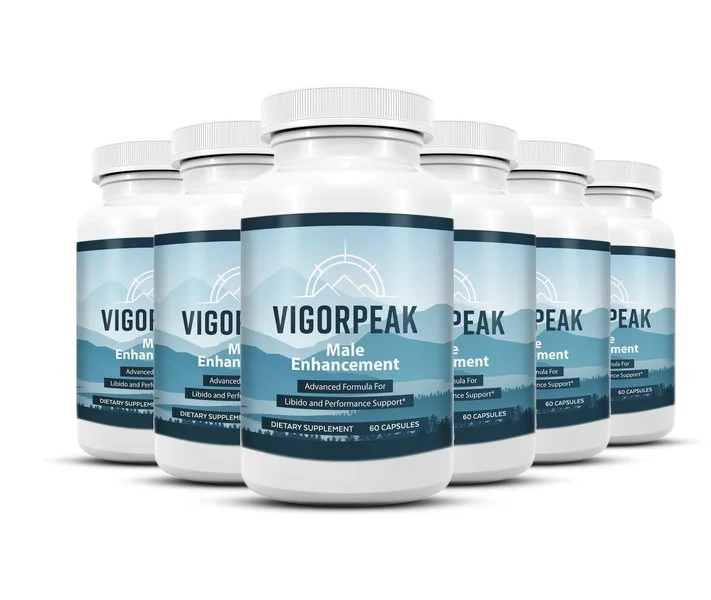
See the exact dose in Vigor Peak
Vigor Peak pairs panax ginseng, maca and mucuna with L-citrulline, pine bark, ginkgo and L-carnitine in one two-capsule daily habit. The six-bottle bundle is the best value at $49 per bottle, with free U.S. shipping and a 60-day guarantee.
Order Vigor Peak — from $49/bottleWhat does the evidence actually say?
Honestly, the science on adaptogens for men is early, uneven and easy to overstate. Panax ginseng carries the most human research of the trio, with trials touching fatigue and everyday performance, yet even there the results are mixed and vary with the specific extract. Maca and mucuna rest more heavily on tradition supported by smaller or preliminary studies. Where evidence is thin, we say so — and the responsible conclusion is that adaptogens are best viewed as support for a healthy routine, not as a treatment for any condition.
| Claim you may see | What the evidence supports | Honest verdict |
|---|---|---|
| “Adaptogens balance stress hormones” | Early lab and small human signals only | Plausible, not established |
| “Ginseng boosts energy and stamina” | Mixed human trials, extract-dependent | Promising but inconsistent |
| “Maca supports libido and vitality” | Traditional use plus small early studies | Suggestive, needs more research |
| “Mucuna lifts mood and drive” | L-DOPA content plus limited studies | Traditional, under-studied |
| “Adaptogens treat a condition” | No — not a recognised treatment | Avoid this claim entirely |
How should men use adaptogens safely?
Adaptogens are traditionally taken as a consistent daily habit rather than an occasional boost, so the safest approach is a steady, sensible routine layered on top of good sleep, movement and diet. For generally healthy adult men, ginseng, maca and mucuna are widely used and usually well tolerated at typical doses, but “natural” is never the same as “risk-free.”
- Take them consistently — daily and at the same time — since any support builds gradually over weeks, not hours.
- Start with a single well-formulated product rather than stacking many separate powders, so you know what you are actually taking.
- Mind interactions — ginseng in particular can interact with some medications, including blood thinners and diabetes drugs.
- Keep expectations realistic — treat adaptogens as support for a healthy routine, not a fix for a specific problem.
- Ask a professional first if you take any medication, manage a health condition, or are unsure.
If you are also focused on circulation and energy, our guides on supporting male vitality naturally and the wider benefits of mucuna pruriens for men pair well with this one.
When should you talk to a doctor?
Adaptogens support a healthy routine in generally healthy men; they are not a substitute for medical care. Speak with your doctor or pharmacist before starting if you take prescription medication — especially blood thinners, blood-pressure or diabetes drugs — have a diagnosed condition, or notice persistent symptoms such as ongoing fatigue, low mood, or a sudden change in libido or function. A short conversation makes sure anything you add fits safely with your care.
Frequently asked questions
What are adaptogens in simple terms?
Adaptogens are a traditional category of plants - such as ginseng and ashwagandha - said to help the body cope with everyday stress and stay in balance. The term comes from herbal and tonic traditions rather than from a formal medical diagnosis, and the modern evidence is early and mixed.
Are maca and mucuna actually adaptogens?
Panax ginseng is the classic adaptogen of the three. Maca and mucuna are better described as traditional tonic botanicals: maca is a Peruvian root long used for energy and stamina, and mucuna is a velvet bean that is a natural source of L-DOPA. They are often grouped with adaptogens in men's wellness because they share the same everyday, resilience-supporting role.
Do adaptogens for men actually work?
Panax ginseng has the most human research of the group, with studies exploring fatigue and everyday performance, though results are mixed and quality varies. Maca and mucuna rest more on tradition and smaller studies. Honestly, adaptogens are best seen as support for a healthy routine, not a proven treatment for any condition.
Which adaptogens are in Vigor Peak?
Vigor Peak includes panax ginseng as its adaptogen, alongside the traditional tonic botanicals maca and mucuna pruriens. These sit beside L-citrulline, pine bark, ginkgo and L-carnitine in a once-daily two-capsule formula aimed at everyday male vitality.
How long do adaptogens take to notice?
Adaptogens are traditionally taken daily and consistently rather than as a quick fix. Any support they offer tends to build gradually over several weeks of regular use, and individual results vary widely. They work best layered on top of good sleep, movement and diet.
Are adaptogenic herbs safe for men to take?
For generally healthy adult men, ginseng, maca and mucuna are widely used and generally well tolerated at typical doses. However, they can interact with medications and are not suitable for everyone, so anyone taking prescription drugs, managing a health condition, or unsure should ask a doctor or pharmacist before starting.
Check today’s Vigor Peak pricing →
Vigor Peak is a dietary supplement for adult men, not a treatment for any medical condition. These statements have not been evaluated by the Food and Drug Administration. This product is not intended to diagnose, treat, cure or prevent any disease. Always consult a qualified healthcare professional about your individual needs.
References & further reading
- National Center for Complementary and Integrative Health (NCCIH). Asian Ginseng. nccih.nih.gov/health/asian-ginseng
- National Center for Complementary and Integrative Health (NCCIH). Ashwagandha. nccih.nih.gov/health/ashwagandha
- Examine.com. Maca (Lepidium meyenii) — evidence-based summary. examine.com/supplements/maca
- Examine.com. Panax ginseng — evidence-based summary. examine.com/supplements/panax-ginseng
- U.S. National Library of Medicine (PubMed). Mucuna pruriens — research literature. pubmed.ncbi.nlm.nih.gov
- Mayo Clinic. Ginseng, Panax — drugs and supplements. mayoclinic.org/drugs-supplements-ginseng
These references describe the herbs in general terms and do not constitute evidence that any product treats, cures or prevents any condition.
Keep reading: Panax ginseng benefits for men · Maca vs panax ginseng · back to the Vigor Peak blog · homepage.